
Doomsayers and Possibility Explorers
It is time for research, media, politics and citizens to stop and think: What is it we do too much and what is it we do too little

June 27, 2026
🔸
We live in a time saturated with negative energy. Accidents dominate headlines, bad news is good news, and social media are full of outrage and empty of public education. Public debate has become a theatre of suspicion: one flaw is enough to condemn an entire achievement, one misstep enough to erase a lifetime of work. Commentators compete to predict catastrophe, and geopolitics and war talk of have disappeared every mention of peace.
It has become easier to do criticism and destroy than to appreciate, easier to promote fear than understanding, focus on the present and never the possible future. And who bothers about alternatives and possible solutions anymore?
In such an atmosphere, insisting on constructive thinking is an act of rebellion.
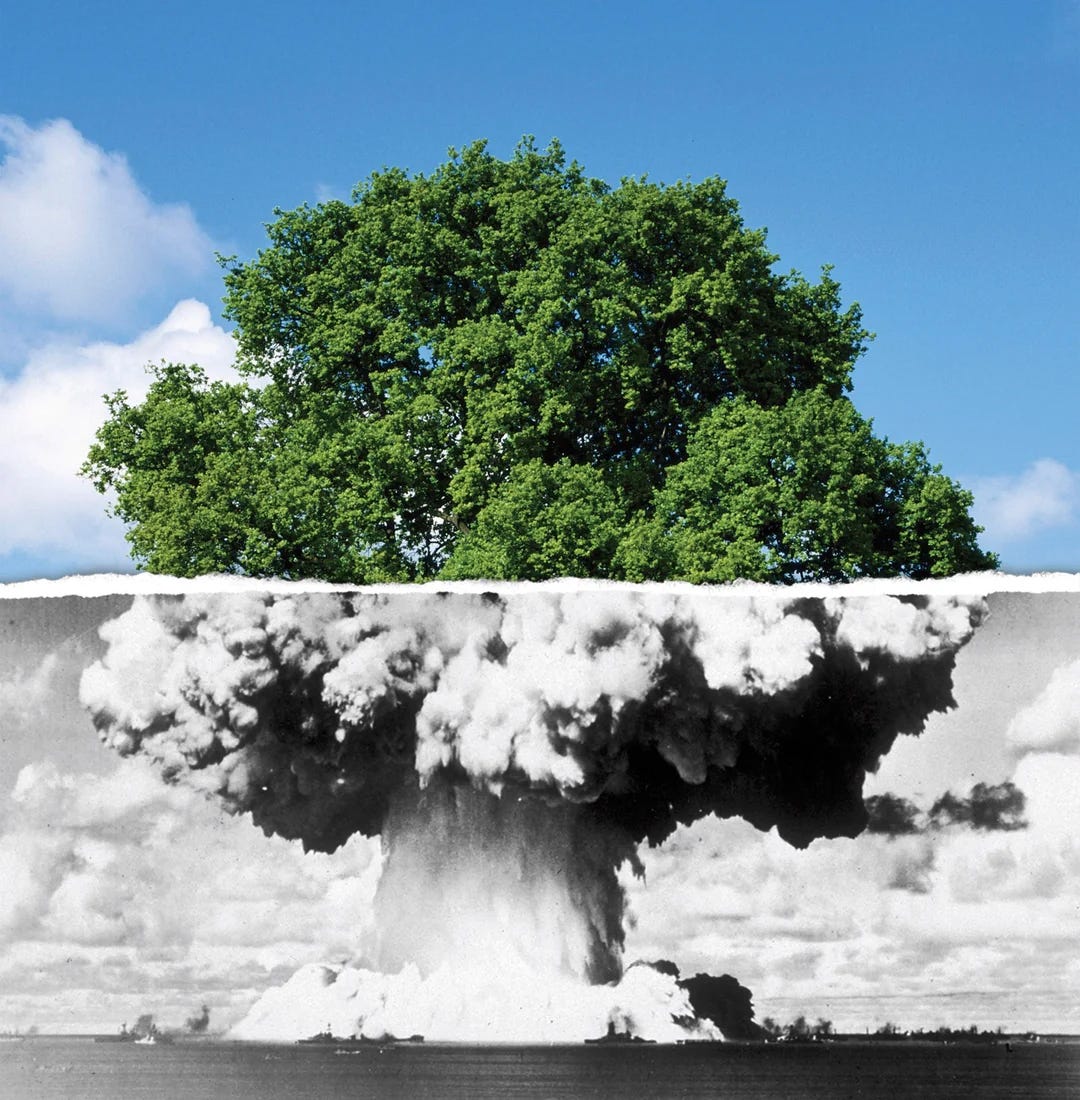
Any fool can start a fight in a bar — or start a war. But not every fool can do conflict resolution, mediation, or peacemaking. These require educated skills, imagination, empathy and a neutral focus on the issue, not the actors. Yet our public sphere has become dominated by those who offer only diagnosis and despair. The militarised geopolitical mindset — now deeply embedded in Western media, think tanks, and political commentary — has elevated the Doomsayer to a position of authority. The louder the prediction of catastrophe, the more “realistic” it is assumed to be.
This is not realism. It is a fatalist failure of knowledge and imagination.
The dominating debate in the West is about military security, not about possible roads to peace in specific and a better world in general. While China hosts vibrant discussions about future global structures, governance, peace, conflict resolution, and a reformed UN fit for the 21st century, the West remains locked in an outdated military‑first worldview.
Offensive deterrence, armament, and ever‑larger military budgets are presented as the road to peace. But if weapons could create peace, we would have been living in peace decades ago.
Even peace research institutes have drifted into military‑security thinking, financed by governments whose policies they dare not challenge. SIPRI in Stockholm is a leading, tragic example – as I have argued for years. Peace – even the word – has disappeared from science, politics and media. I mean true peace – not ceasefire agreements or ‘deal’ that ignorant people call peace negotiations.
The civilisational malaise is that “security” has come to mean military security alone — not human security, not common security, not the security of communities or ecosystems. All – more or less invented threat perceptions are about military threat, not about what challenges we have as societies. It all holds little, if any, relevance for civilian society and welfare. Sadly, it rests on a documented wrongheaded assumption: that militarisation will somehow lead us to a peaceful world or at least make us safer. In reality it serves only the Miliary-Industrial-Media-Academic Complex’s elites.
This causality is backwards. It must be reversed. There are much better roads to peace.
Peace does not emerge from weapons. Weapons may, at best, help secure a peace that has already been created. Peace is made by addressing the underlying conflicts — every single time, without exception. That requires knowledge, dialogue, empathy, and the ability to imagine a better future. The reason peace has been “disappeared” from Western discourse is simple: it demands a forgotten competence. It demands theoretical knowledge, understanding and human experience. It demands the hard work of conflict transformation. Focusing on weapons, battlefields and actors is easier — but it only prolongs militarism until, God forbid, a major war erupts.
The peace paradigm is the major perspective for the future: address the conflict that made the parties take to war; help them see a better future through creative futures thinking; and implement it with the support of those who know their trade, e.g. the UN and other peace‑oriented organisations. Not governments who, woujldwide without one exception, have no advisers on conflict-resolution and peacemakers.
Only then — then — can the world reduce its weapons, let wars fade, and redirect resources toward building the better world that is eminently possible. Weapons cannot do this. The addiction to them is humanity’s single greatest curse, as much of a curse as drug addiction or alchohol is to the individual. It can be remedied only by a new thinking for peace.
And here the contrast becomes decisive.
Possibility Explorers do not underestimate dangers, risks, or the seriousness of the present. They see the same crises the Doomsayers see. But they refuse to stop at diagnosis and false prognoses. They refuse the false comfort of fatalism. They reject the intellectually lazy slide from “this is dangerous” to “this is hopeless.” Instead of closing down imagination, they open it — outlining potentials, sketching pathways, and inviting dialogue about what could be built rather than what must be feared.
They challenge narrow perspectives and inherited assumptions. They insist that alternatives exist even when institutions claim otherwise. They are not utopians; they are practitioners of foresight – eutopians in contratst to geopolitical dystopians.
In a time of militarised fatalism, foresight is intellectual resistance.
Doomsayers speak with the heavy certainty of people who have stopped imagining. Their attention is locked onto the immediate moment — the crisis of the day, the threat of the hour, the spectacle of decline. They present the present as destiny, as if today’s turbulence were the only horizon available. Doom is easy. Doom requires no creativity, no responsibility, no proposals. It is the intellectual equivalent of shrugging.
Unfortunately, doom has a very counterproductive political function.
A population convinced that the future is already lost is a population that will not demand alternatives. Fear narrows the imagination, and narrow imagination serves those in power who prefer resignation over reflection and alternatives. Doom becomes a quiet ally of the status quo: if nothing can be changed, then nothing must be changed. And, worse, they deprive people of hope and the will to take action.
Possibility Explorers take a different stance.
They do not deny risks or difficulties, but they refuse to let the present exhaust the future. They outline potentials and invite dialogue about possible solutions. They challenge narrow perspectives, question inherited assumptions, and insist that alternatives exist even when institutions claim otherwise.
In this sense, they practice a civic duty similar to that of a good doctor. Diagnosis is necessary, but diagnosis alone is malpractice – and doom prognosis is irresponsible unless you tell what might be done to avoid it, heal the patient. Responsible professionals do not merely describe what is wrong; they propose treatments, healing, and care. Likewise, responsible citizens — and responsible thinkers — must offer more than doom. They must offer dialogue, hope and direction.
Where Doomsayers end the conversation, Possibility Explorers begin it.
There are those who think that working with constructive alternatives is ‘naive’ or ‘idealistic.’ They are stuck in the negative and militaristic thinking of our dark times. Power elites will love them for taking their side and for being totally harmless.
Peace is an alternative, eminently possible through education, radical re-thinking, good ideas and vision.
🔸
Dear Professor Olberg,
as one who had the chance to evolve through the Global Military & Commercial Industrial Complex of Aerospace, only now, as a retired pensioner, free of NDAs and Confidentiality restrictions, can I grasp some of the more ample and complex matter you mentioned in your article.
Our societies are driven by an "old mentality" of "Blame & punishment" that is counter-productive (meaning that it discourages "Continuos Improvement" by encouraging a defensive thinking). We are more focused on "Whom to blame & punish" than on "how to Fix Problems". Fixing Problems requires a sincere and persistent "Root Cause Analysis" based on Intellectually & Emotionally advanced Thinking (Analysis & Synthesis).
As long as our Elites cannot get out of this "Blame & Punishment" trap of Intellectual & Emotional Poverty, our societies will continue to suffer from Bullying in its many various forms. Bullying is based on Intellectual & Emotional Poverty that denies the Individual Agency of Humans to react to abuse. Bullies fail to grasp that "What Goes Around ... Comes Around".
Intellectual Poverty is not only the lack of "Subject Matter" knowledge, but also the lack of Cognitive Empathy, that hinders our capability to understand the rational arguments of Others.
Emotional Poverty is not only the lack of Affective Empathy that hinders our sense of Compassion, but it also blocks our capability to see other as Sensitive and Thoughtful human beings.
Only by developing the Intellectual & Emotional capacities of those who end up being selected and promoted into Societal Leadership (Elites and Politicians), can we hope to disconnect form this old culture of "Blame & Punishment".
Please allow me to spoil your garden just a little bit. I have brown thumbs and cannot really cultivate plants not robust enough. I have learned something about cultivating humans from my own education process and life experience, but that is way too shallow, as I have a fairly limited and boring life. At the same time, I learned a lot from unplugging the weeds in my yard and from confrontations large and small in my life, real, perceived, or contextual. What I concluded is that a cultivated garden, or even an uncultivated garden, can be very beautiful. However, there has to be a force of some kind to remove bad weeds, vines, molds, viruses, bacteria, or even too many beetles and aphids.
In most normal societies, there are enough people with good intentions, or at least without bad intentions. When the Chinese Communists just took over China in the early 1950s, the CCP wanted to purge and prosecute landlords, as it was a claimed goal during the civil war. Yet CCP cadets from many places in rural China reported major difficulties. Because even in China at that time, not all landlords or merchants were ruthless or evil. Peasants, although uneducated, even uncivilized, did not think the wanton persecution of landlords was a right thing to do.
However, even when good people make up 99% of society, they are still no match for the 1% "bad apples". I have seen little rascals becoming youth mobs and eventually ironed back to stubborn career military NCOs. But I consider them the minority. The majority of little rascals simply grow into the real mob and criminal society. When there is no curb for such dark elements, the police force and the government officials get corrupted as well. I think as long as that 1% are systematically unplugged, the good people will take care of themselves, and the whole society will prosper. But if we simply feed and water the whole yard without removing the bad elements, the garden will be destroyed sooner or later, and we will have a jungle.