

☮️
November 3, 2026
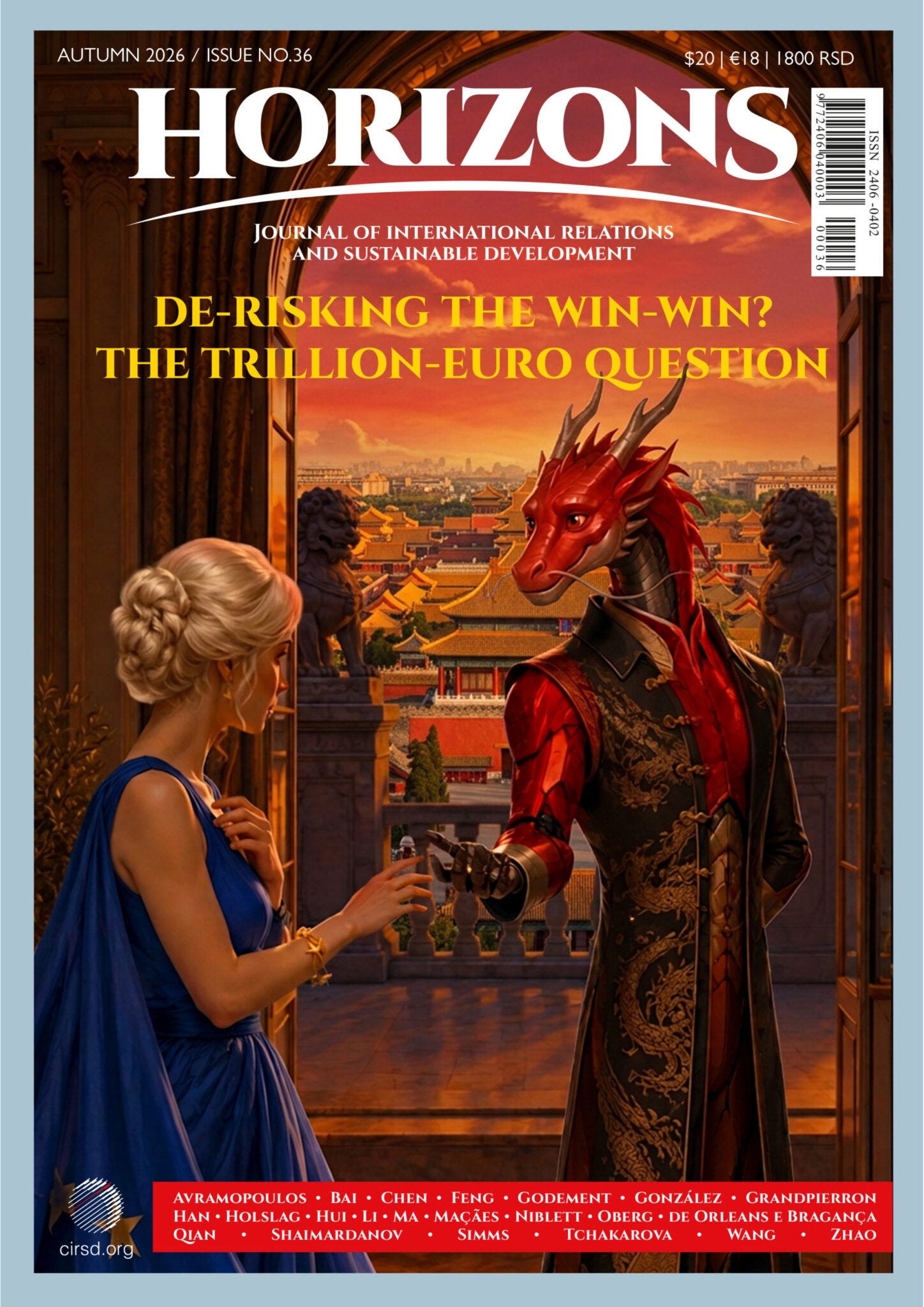
I am happy to be published in Horizons, which is produced by the Center for International Relations and Sustainable Development, CIRSD, in Belgrade.
My contribution brings out a radical re-thinking of what concepts such as defence, security, deterrence – and peace – may mean if we want to create a more peaceful world. It also summarises a few things I have been working on over the last few decades.
Implicitly, it relies on Johan Galtung’s simple advice: “Make peace first and then secure it,” because the present security-first thinking based on offensive deterrence, national security and military armament will never lead to peace, only to more violence.
Much of your points resonate for me, but here I havve some pause: "the present security-first thinking based on offensive deterrence, national security and military armament will never lead to peace, only to more violence."
I think understanding what the so-called western world is doing requires a recognition that peace isn1't their objective. Pacification - subjugation - is. And that goes both within these societies and in their external relations. It's not driven by fright but rather by greed: the belief of a god given right to own and control. It is not about "offensive deterrence" other than in propaganda. This should be clear by now after about 4-5 centuries of offensive power being moved around the globe in order to subjugate peoples and take their wealth. We have seen in before our very eyes this year with Venezuela, which no one can credibly say was every threatening anyone. Colonialists have always used this language of "deterrence" to dress up naked greed, where a claim of bringing "enlightenment" was not working as an excuse.
Securing peace from within these societies actually requires dedicating effort to breaking down the impulse to subjugate others, which people literally believe is an entitlement endowded to them. Their human right, over non-humans or sub-humans. That is the magnitude of the task before us.
This use of negative and positive peace makes very much sense. But instead of using the word 'peace' twice in these two terms, I prefer to use a combination of two words: 'peace and harmony'. Harmony is the keyword, as used by the Chinese. Harmony, akin to positive peace, implies a substainable way of containing any conflict or difference between opposing sides or views. Whereas, Peace simply means the end of violence - it has a singular and temporal dimensions, unlike Harmony, which has a complex and continuity dimensions. We need both peace and harmony. One cannot exist without the other.